As a little side project, I harvested more electronics and other components from another batch of childhood vehicles for potential customs last month. Two of them were cosmetically restored to add missing and additional details they didn’t have since I chose to keep them assembled, only without the components I wanted.
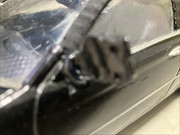
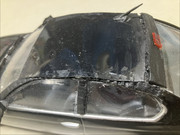
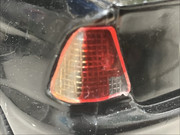
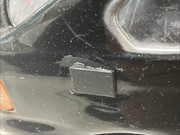
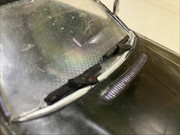
This big black friction powered car (which later turned out to be a BMW Compact) had a broken roof and cracked axle gear, so I removed the friction motor and kept the rear axle in place without it; initially tried hot gluing fuse bead bearings to the chassis, but they broke off and had to be replaced with wooden sticks and cardboard inserts. The new roof was made of cardboard, only for the middle to be replaced with a clear plastic sheet painted black on one side to blend in with the body. For the wing mirrors, I heat-joined fuse beads on a pegboard with masking tape and a soldering iron to make them consistent on both sides; first time I tried using this technique to make actual parts for anything. Like the foil strips on my wooden lorry’s mirrors, they have reflective tape on the inside. Neither the tail lights nor the indicators were painted and there was no brake light, so I painted those with markers and made the latter out of clear plastic. Other external details included matchstick wipers (front and rear), a more pronounced fuel door and a toothpick antenna.
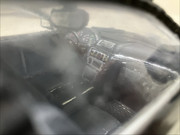
The interior was originally chrome silver except for the steering wheel, so I repainted it black and grey with enhanced detail such as dashboard instruments, painted buttons, a glove compartment, floor mats, pedals and an indicator/wiper handle. The inner walls and ceiling of the shell were painted light grey to make the interior visible again.
I only managed to make out the name “Compact” on the chassis after I finished restoring, so the new details are likely inaccurate since they were largely freelanced.
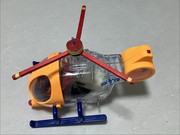
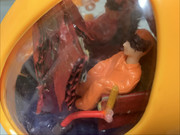
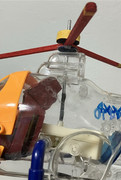
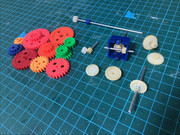
There was also a bump ’n go helicopter that had a “ton” of gears in it and a transparent fuselage to show them spinning as it moved. After removing all the workings, I added a cardboard cockpit that (nearly) matched the colour scheme and glued in two bus passengers as pilots; with the heads cheaply repainted to look like they’re wearing helmets and visors. It was notably missing the main rotor, so I fashioned a custom one with a cardboard hub and wooden blades. I originally wanted to fit the rotor to a simple shaft so it could spin loosely, but got a better idea when I found another friction motor similar to the one from the BMW with a bigger flywheel. Using a heat shrink tube and a compatible axle, I extended one end of the shaft so it could reach the top and fitted the rotor (somewhat loosely) without gluing it on; that allowed it to spin faster than the axle’s actual speed, as well as (unintentionally) making it stop when encountering resistance without stopping the rest. The bottom end has a wheel from the car the motor came from to help spin it from underneath, either while holding or by pushing/pulling the heli diagonally (not forwards or backwards) on the ground.
Bonus:
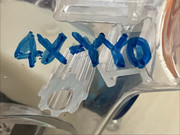
The (currently fictional) Israeli tail number I added (4X-YYO) is a reference to the initials of our names.